
The Canada Groceries and Essentials Benefit: A Response That Doesn’t Match the Scale of the Problem
A measured look at new food affordability measures, why pricing won't meaningfully change, and why relief isn’t the same as reform.

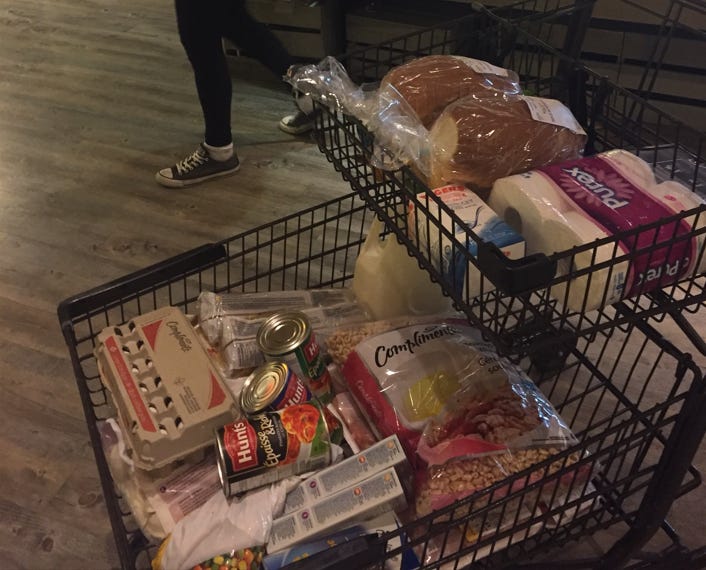
I’ve read through Prime Minister Mark Carney’s newly announced food affordability measures, and while I understand the intent behind them, the response feels mismatched to the scale of the problem Canadians are facing.
What the Canada Groceries and Essentials Benefit actually does
The centrepiece of the announcement is the Canada Groceries and Essentials Benefit, an expansion of the existing GST rebate for low- and modest-income Canadians.
In the first year, a family of four would see their annual benefit increase from roughly $1,100 to $1,890. An individual would see theirs rise from about $540 to $950. After that initial year, the GST rebate would increase by 25 per cent for the following four years.
Short-term relief without structural change
There’s no question that this will provide some short-term relief. When food prices are rising faster than wages and overall inflation, even modest income increases can help people manage their budgets. But this approach frames grocery affordability primarily as a household-income issue, rather than as a problem rooted in pricing power and market structure.
The missing focus on grocery giants
What’s absent from this is a direct response to the companies setting those prices.
Canada’s grocery sector is dominated by a small number of very large corporations.
Loblaws is the most visible example in my mind, but it is part of a broader concentration of market power. These companies exert significant control over pricing, shelf space, supplier access, and competition.
They continue to report substantial profits, even as households reduce spending on essentials. Increasing a rebate does not alter that imbalance. It allows people to better tolerate high prices, but it does not change how those prices are set, and continues to get worse in many cases.
Public money cushioning private pricing
In practical terms, public funds are being used to help consumers afford prices determined by highly profitable companies, without requiring those firms to adjust margins, pricing strategies, or market behaviour.
The checkout donation bin
That dynamic mirrors a familiar dynamic in many grocery stores.
After paying full retail price at checkout, customers are often invited to donate food in a bin placed just beyond the tills. They already paid full prices for the food. The grocery chain has already collected its revenue and profit, no matter who eats the food.
Why direct cash donations go further
Food banks themselves are clear about this: cash donations are usually more effective than donated groceries. With direct funding, food banks can purchase food in bulk, access wholesale pricing, and negotiate discounts that individual shoppers cannot.
The same amount of money, if donated directly, can often supply more food to more people than retail-priced donations.
Supply-side investments and their limits
The government has also announced supply-side investments: $500 million to help food suppliers expand capacity, $150 million for greenhouses and abattoirs, accelerated tax write-offs for greenhouse investments, and additional funding for food banks and local food infrastructure.
Over time, some of these measures may improve supply resilience. They may help producers scale up or stabilise certain parts of the food system.
I wish these measures were funded by corporate profits, not taxpayers.
Incremental tools in a worsening situation
There is also a commitment to develop a National Food Security Strategy, including unit price labelling to address shrinkflation, and to increase support for the Competition Bureau.
These are practical tools. They may improve transparency and enforcement. But they are incremental, and they do not reflect the urgency many people are experiencing now.
Why a public grocery option matters
That’s why I support NDP leadership candiate Avi Lewis’s comments regarding the need for a publicly funded and publicly operated grocery store.
The idea is to operate grocery stores on a non-profit basis, setting prices closer to cost rather than maximising profit.
A public grocery option could lower prices through bulk purchasing, centralised distribution, and stable supplier contracts. It would introduce competition into a market dominated by a small number of large chains and could provide affordable food in communities that private retailers often avoid.
Such a model could also offer more predictable contracts for Canadian food producers, improve price transparency, and support stronger labour standards. More broadly, it reframes food as a basic necessity and addresses affordability directly at the point of sale rather than relying on rebates or charity.
The proposal is intended as a structural response to grocery affordability, not a short-term relief measure.
Food as an essential public service
A public grocery option would NOT be designed to maximise shareholder returns. Its purpose would be to provide affordable food, establish a clear price benchmark, and introduce competition currently missing from the market.
Canada already accepts public delivery models for essential services like healthcare and utilities because we recognise that some needs are too fundamental to be governed entirely by profit incentives. Food meets that same standard.
Temporary relief is not a solution
Conservatives have criticised the GST rebate increase as a temporary measure that does not lower grocery prices, and on that point, they are correct. They acknowledge that it will not produce lasting price reductions. Temporary relief can help people cope, but coping is not the same as solving the problem.
When grocery chains report billions in profits while households are forced to cut back on basic necessities, modest rebates and indirect investments do not match the scale of the problem. Food is not discretionary spending. Addressing affordability requires more than absorbing the shock of high prices. It requires confronting how prices are set, and whose interests are prioritised.
A step forward
It’s fair to say these measures represent a shift from a right-leaning government that has so far been cautious about intervening in markets. Expanding the GST rebate, investing in food supply, and acknowledging food insecurity as a public concern are important steps, so this is progress.
These measures help people manage high grocery prices, but they do not reduce those prices or meaningfully constrain the market power of the companies setting them.
Acknowledging a step forward isn’t cause for celebrating it as a solution. Until grocery prices come down, competition improves, and food insecurity is reduced in measurable ways, this remains partial relief rather than a lasting fix.
Recognising incremental progress while continuing to press for more substantial changes, including options like a publicly funded grocery chain, is an honest assessment of what this moment demands.
Closing thoughts
Until those concerns are addressed directly, announcements like this will continue to feel like limited responses to a persistent and increasingly visible problem in people’s daily lives.
Support my work
As always, I don’t invoice those who need my help. I’ve never billed anyone for the support I provide since I started doing this 35 years ago. Everything I do is free for the people I help. That’s why community support means so much. It keeps this work going.
If you’d like to help sustain my work, please consider donating below. Every bit of support helps ensure I can continue showing up for people.

